

The Difference Between Oral Supplements And Intravenous Therapy
Oral supplements and intravenous therapy are both used to deliver vitamins, minerals, and other nutrients into the body. While they may appear similar in purpose, the way they are absorbed, processed, and utilized differs significantly. These differences can influence how quickly nutrients become available, how much of a dose is ultimately used, and which method may be more appropriate under specific conditions.
Understanding these distinctions requires looking at how each method interacts with the body’s systems, particularly digestion, circulation, and cellular uptake.
How Oral Supplements Are Absorbed Through Digestion
 Oral supplements enter the body through the digestive tract. After ingestion, they pass through the stomach and into the small intestine, where most nutrient absorption takes place. During this process, nutrients must be broken down into absorbable forms before they can cross the intestinal lining and enter the bloodstream.
This pathway depends on multiple variables, including stomach acidity, digestive enzyme activity, and the condition of the intestinal lining. If any part of this system is impaired, absorption may be reduced or delayed. Even under normal conditions, the digestive process introduces a time gap between ingestion and availability in circulation.
How Intravenous Therapy Delivers Nutrients Directly
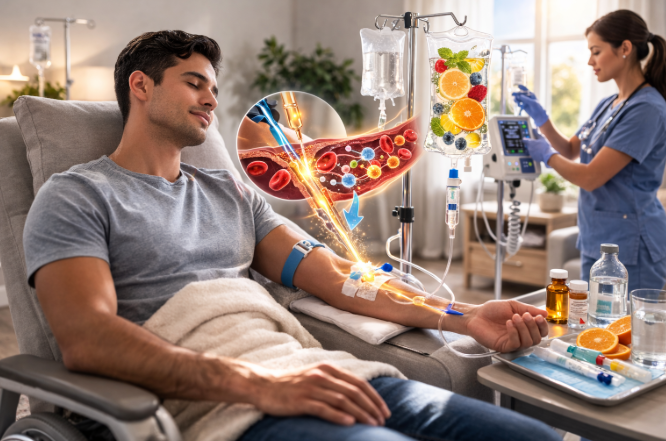
Intravenous therapy bypasses the digestive system entirely by delivering fluids and nutrients directly into the bloodstream through a vein. This method eliminates the need for breakdown and intestinal absorption, allowing nutrients to circulate immediately after administration.
Because this route avoids digestive variables, it provides a more controlled method of delivery. In clinical and wellness settings, this approach is often used when rapid availability or higher concentrations of nutrients are required, or when digestive limitations affect oral intake.
Differences in Absorption Efficiency
One of the primary distinctions between oral supplements and intravenous therapy is absorption efficiency. With oral intake, a portion of nutrients may be lost during digestion due to incomplete breakdown or limited absorption capacity. Factors such as nutrient form, interactions with other substances, and individual physiology all influence how much is ultimately absorbed.
Intravenous delivery, by contrast, introduces nutrients directly into circulation. This means the administered dose is immediately available without first-pass losses through digestion. However, this does not automatically translate to better outcomes in all cases, as the body still regulates how nutrients are distributed and used.
Onset Time and Bioavailability
Oral supplements typically require time to move through the digestive process before entering the bloodstream. Depending on the substance, this can range from minutes to several hours. The rate at which nutrients become available is influenced by food intake, gastric emptying, and metabolic factors.
Intravenous therapy provides immediate bioavailability. Nutrients are present in the bloodstream as soon as the infusion begins, which may be relevant in situations where timing is important, such as acute depletion or recovery needs.
Impact of Digestive Health on Nutrient Uptake
The effectiveness of oral supplements is closely tied to digestive health. Conditions such as malabsorption syndromes, inflammation of the gastrointestinal tract, or reduced enzyme production can limit how well nutrients are absorbed. Even mild digestive issues can alter consistency in nutrient uptake over time.
Intravenous therapy avoids these variables. Since it does not rely on digestion, it can provide a consistent delivery method regardless of gastrointestinal function. This distinction becomes relevant for individuals who have difficulty maintaining nutrient levels through oral intake alone.
Dosage Control and Concentration Differences
Oral supplements are typically formulated in standardized doses designed for gradual absorption. The body regulates uptake through intestinal transport mechanisms, which can limit how much of a nutrient is absorbed at one time.
Intravenous therapy allows for higher concentrations of nutrients to be introduced directly into circulation under controlled conditions. This can result in temporarily elevated blood levels compared to oral intake. However, the body still manages distribution, storage, and excretion, so a higher concentration does not necessarily mean sustained availability.
Variability in Individual Response
Responses to oral supplements can vary widely between individuals. Differences in metabolism, gut microbiome composition, and existing nutrient levels all influence how a person responds to supplementation. As a result, two people taking the same supplement may experience different levels of benefit.
Intravenous therapy reduces variability related to digestion but does not eliminate individual differences. Factors such as circulation, cellular uptake, and metabolic demand still play a role in how nutrients are utilized once they enter the bloodstream.
Situations Where Each Method Is Commonly Used
 Oral supplements are commonly used for general maintenance, long-term nutritional support, and situations where gradual replenishment is sufficient. They are widely accessible and can be integrated into daily routines without medical supervision in most cases.
Intravenous therapy is more often used in controlled environments where specific outcomes are being addressed, such as rehydration, recovery support, or targeted nutrient delivery. In some settings, individuals explore options like IV treatment when looking for an alternative method of delivering nutrients without relying on digestion.
Limitations and Practical Considerations
Each method carries its own practical considerations. Oral supplements are convenient and non-invasive but depend on consistent intake and functional digestion. They may also require time before measurable changes occur.
Intravenous therapy involves a clinical or supervised setting, as well as procedural considerations such as sterile technique and monitoring during administration. It is not typically used as a daily replacement for oral intake but rather as a supplemental approach under specific circumstances.
Long-Term Use and Maintenance Approaches
For long-term nutritional support, oral supplementation is often used due to its practicality and ease of integration into daily life. Regular intake allows for steady replenishment of nutrients over time, assuming adequate absorption.
Intravenous therapy is generally applied intermittently rather than continuously. It may be used to address short-term needs or to support periods where oral intake is insufficient. The choice between methods often depends on the context, individual health status, and the intended outcome.
