

What Is IV Therapy and How Does It Work
IV therapy is a medical treatment that delivers fluids, vitamins, minerals, and other nutrients directly into your bloodstream through a small catheter inserted into a vein. Because it bypasses the digestive system entirely, nutrients reach your cells at near-100% absorption compared to the limited uptake oral supplements provide. The result is faster hydration, more reliable nutrient delivery, and effects that most people feel within minutes of starting an infusion.
IV stands for intravenous, meaning within the vein. The technique has been a cornerstone of hospital medicine for decades, used to treat dehydration, deliver medications, and support recovery from surgery. In recent years, wellness-focused IV therapy has expanded access to the same delivery mechanism for hydration, immune support, energy, and recovery outside of a hospital setting.
How IV Therapy Delivers Nutrients to Your Body
 When you swallow a vitamin C supplement, it travels through your stomach and small intestine before any amount reaches your bloodstream. The digestive process degrades a portion of what you take, and your intestines absorb only a fraction of what survives. According to research published by the National Institutes of Health, oral vitamin C absorption drops significantly at higher doses, with bioavailability falling as low as 50% at 1,000 mg and declining further above that threshold.
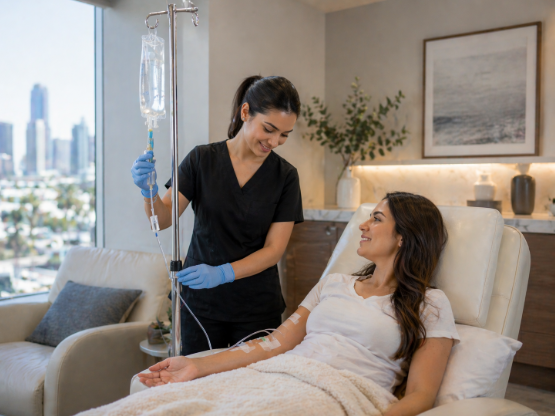
IV therapy takes a different route. A trained medical professional inserts a small, flexible catheter into a vein, typically in the forearm or the back of the hand. A bag containing your prescribed solution hangs above, and gravity or a regulated infusion pump controls the drip rate. The solution flows directly into your venous circulation and reaches your heart, lungs, and tissues within seconds. Nothing is lost to digestion. The full dose goes to work.
The process is typically painless after the initial needle stick. Most people sit comfortably during the infusion, which runs anywhere from 30 minutes to 90 minutes, depending on the volume and formulation prescribed.
What Goes Into an IV Drip
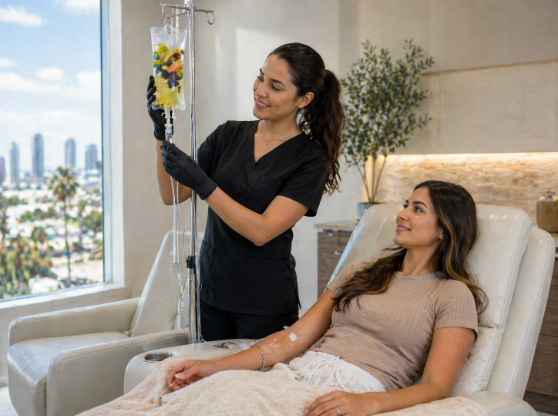
The base of most IV drips is a sterile saline solution, normal saline (0.9% sodium chloride), or lactated Ringer’s, which restores fluid volume and electrolyte balance. From there, a formulation is customized based on the treatment goal. Common additions include:
- B vitamins (B1, B2, B3, B5, B6, B12) for cellular energy production and nervous system support
- Vitamin C at doses far higher than oral supplementation can reliably deliver, used for immune function and antioxidant activity
- Magnesium, which plays a role in more than 300 enzymatic reactions, including muscle relaxation and blood pressure regulation
- Calcium gluconate for bone health and neuromuscular signaling
- Glutathione, a master antioxidant that the liver produces but that declines with stress, illness, and age
- Zinc for immune defense and wound healing
- NAD+ (nicotinamide adenine dinucleotide), a coenzyme involved in cellular energy and DNA repair, has drawn significant clinical interest
- Amino acids for tissue repair and metabolic support
Formulations like the Myers Cocktail IV Drip combine several of these nutrients in a specific ratio developed for broad-spectrum support. At the same time, targeted drips isolate ingredients for a single outcome such as immune activation, hangover recovery, or beauty-focused antioxidant delivery.
Who Administers IV Therapy and Where
IV therapy must be administered by or under the direct supervision of a licensed medical professional. At Doctor Drip IV Hydration, every infusion is overseen by credentialed medical staff at our Los Angeles clinic. Before any IV is placed, a brief intake process confirms there are no contraindications for the chosen formulation.
This clinical oversight matters. IV solutions introduced into the bloodstream bypass every biological filter your body uses to screen what it absorbs. The sterility of the solution, the accuracy of the formulation, and the skill of the person placing the catheter are all non-negotiable safety requirements.
What to Expect Before, During, and After a Session
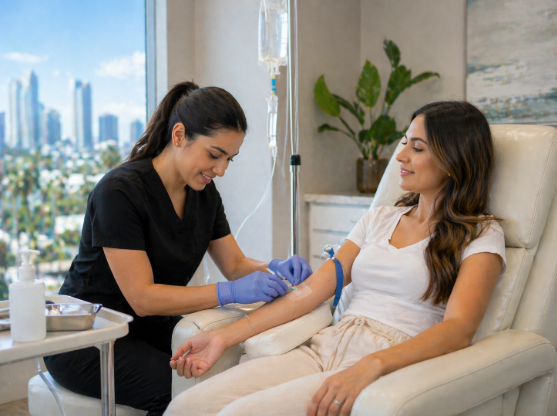 Before your infusion, the clinical team reviews your intake form, confirms allergies and current medications, and selects or adjusts your formulation. You do not need to fast beforehand. Arriving well-hydrated can make the catheter placement easier, though it is not required.
During the infusion, you sit in a comfortable reclining chair. The drip rate is set, and from that point, you can rest, read, or use your phone. Most infusions run 45 to 60 minutes. You may notice a slight cool sensation in your arm from the IV fluid, which is normal. Some formulations, particularly those with magnesium, produce a mild warmth or flushing sensation that fades quickly.
After the session, the catheter is removed, and a small bandage is applied. Most people notice effects within hours. Hydration drips produce results almost immediately. Vitamin and nutrient drips typically build over the following 12 to 24 hours. There is no downtime. You can drive, return to work, or resume normal activity immediately after leaving the clinic.
How IV Therapy Differs from Oral Supplements
The primary distinction is absorption. Oral supplements depend on a functioning digestive system that is hydrated, not inflamed, and operating at baseline. When you are dehydrated, hungover, ill, or under significant physical stress, that baseline drops and absorption falls further. IV therapy works regardless of your digestive state at the time of treatment because it never involves digestion at all.
A second distinction is dose ceiling. Oral vitamin C above 2,000 mg per day commonly causes gastrointestinal distress in most adults. IV vitamin C can be administered at therapeutic doses of 10,000 mg or higher without the same gastrointestinal side effects, because the gut is not involved in the delivery.
This does not mean oral supplementation has no value. Daily micronutrient intake is well-supported through diet and oral supplements. IV therapy is most effective as a targeted intervention when you need fast, reliable results and cannot wait for the digestive route to work.
Conditions and Goals IV Therapy Commonly Addresses
IV therapy is used across a wide range of situations, from acute recovery to ongoing wellness maintenance. Common uses include:
- Dehydration from illness, heat, exercise, or travel
- Hangover recovery, where both fluid loss and nutrient depletion are significant
- Immune support during cold and flu season or before and after travel
- Athletic performance recovery, reducing delayed-onset muscle soreness,s and replenishing electrolytes
- Energy and fatigue, particularly when chronic low energy is linked to B vitamin or magnesium insufficiency
- Skin health and antioxidant delivery through glutathione and vitamin C
- Weight management support, when combined with a broader metabolic program
- NAD+ replenishment for cellular repair, cognitive clarity, and anti-aging support
IV therapy is not a substitute for medical treatment of diagnosed conditions. It is a supportive tool that delivers nutrients faster and more completely than oral alternatives.
Is IV Therapy Safe
When performed by qualified medical professionals using pharmacy-grade sterile solutions, IV therapy carries a low risk profile for most healthy adults. The most common side effects are minor bruising or soreness at the insertion site, a brief cool or flushed sensation during the infusion, and occasional lightheadedness if fluids are delivered too quickly. Serious adverse events are rare and almost always linked to improper formulation, non-sterile solutions, or administration by untrained personnel.
People with kidney disease, congestive heart failure, or certain electrolyte disorders require careful evaluation before IV therapy because impaired fluid regulation changes the risk profile. A clinical intake review before every session is the standard that protects against these risks.
How Much Does IV Therapy Cost
 IV therapy sessions in Los Angeles typically range from $100 to $400, depending on the formulation. Basic hydration drips are at the lower end of that range. NAD+ infusions, which require longer session times and higher-cost ingredients, are at the upper end. Most clinics offer package pricing for recurring clients. IV therapy is not typically covered by health insurance when used for wellness purposes, though some formulations may qualify under HSA or FSA spending when prescribed for a medical indication.
Frequently Asked Questions
How long does an IV therapy session take?
Most IV therapy sessions run between 30 and 90 minutes. Basic hydration drips are often complete in 30 to 45 minutes. More complex formulations like NAD+ therapy, which requires a slower infusion rate for comfort, may take 60 to 90 minutes or longer.
Does the IV needle hurt?
The initial catheter placement feels like a brief pinch. Once the needle is removed and the flexible catheter is secured, most people feel little to nothing for the rest of the session. Topical numbing agents are available at some clinics for patients who are needle-sensitive.
How often can you get IV therapy?
For general wellness and hydration, most people schedule IV therapy once or twice a month. Athletes or people using IV therapy for acute recovery may schedule sessions more frequently during high-demand periods. Your clinical team can recommend a cadence based on your goals and the specific formulation you are using.
Is IV therapy the same as a hospital IV drip?
The delivery mechanism is the same. The difference is in formulation and purpose. Hospital IVs are prescribed for specific medical conditions and may include medications, blood products, or electrolyte corrections. Wellness IV therapy uses nutrient and hydration formulations designed for recovery, performance, and support rather than acute medical treatment.
Can IV therapy help with hangovers?
Yes. A hangover is primarily the result of dehydration, electrolyte depletion, and the accumulation of metabolic byproducts from alcohol processing. IV therapy addresses all three by restoring fluid volume, replacing lost electrolytes, and delivering B vitamins that support your liver’s detox pathway. Most people report significant improvement within 30 to 60 minutes of starting a hangover infusion.
Who should not get IV therapy?
People with kidney disease, congestive heart failure, or uncontrolled hypertension should consult a physician before pursuing IV therapy. Anyone with a known allergy to any component in the planned formulation should disclose that during intake. Pregnant individuals should also speak with their OB before scheduling. A clinical intake review is standard at every reputable IV therapy clinic and screens for these contraindications.
Doctor Drip IV Hydration serves patients at our Los Angeles clinic on South Fairfax Avenue, with infusions overseen by licensed medical staff. If you are ready to experience the difference that direct-to-bloodstream nutrient delivery makes, call (424) 229-2329 to schedule your session or ask which formulation fits your goals.
Doctor Drip IV Hydration
1086 S Fairfax Avenue
Los Angeles, CA 90048
(424) 229-2329
Serving Los Angeles, West Hollywood, Beverly Hills, Culver City, Santa Monica, and Silver Lake.
